
By April Struthers, Director of Knowledge Exchange, Research & Learning
If CRNs don’t provide direct services, what exactly do they do?
Community Response Networks play a unique role in abuse prevention across British Columbia.
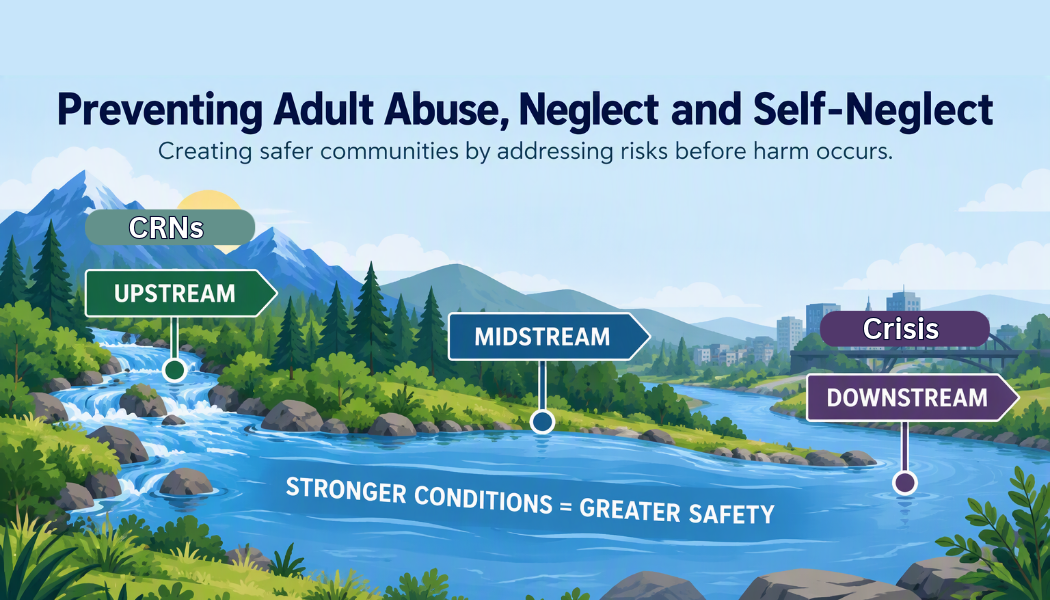
They bring people, organizations, and communities together to build awareness, strengthen relationships, and create conditions that help reduce the risk of abuse, neglect, and self-neglect before harm occurs.
This approach is often described as “upstream” or “root cause” prevention. Rather than responding only after abuse has occurred, it focuses on the community conditions, attitudes, and behaviours that can contribute to abuse and increase vulnerability.
A simple way to think about the CRN model is that it focuses on addressing community vulnerability rather than meeting the needs of individual people directly.
CRNs are self-organizing networks that support a coordinated community response to abuse.
Across more than 275 communities throughout British Columbia, nearly 100 Community Response Networks bring together local organizations, service providers, and community members to share responsibility for preventing abuse.
And they help prevent abuse through education, encouraging local learning, strengthening collaboration, and making use of each community’s unique strengths and resources.
One of the most powerful aspects of the CRN model is creating a collaborative, respectful space where knowledge, resources, and responsibility are shared. By bringing people together across organizations and sectors, CRNs help break down service silos and build stronger relationships between service providers and community members.
CRNs also help communities recognize the signs and patterns of abuse and create clear pathways for people seeking help.
Through outreach activities, public awareness events, presentations, and community engagement, CRNs help keep abuse prevention visible and understood at the local level.
And through Community Impact Grants, CRNs can respond to local priorities, partner with organizations on events and initiatives, and support small projects that increase awareness and strengthen community responses to abuse.
What makes CRNs unique is that they do not provide direct services or programs to individuals. Instead, they act as a community-based network that connects organizations, strengthens local support systems, and helps identify emerging issues and trends related to abuse.
CRNs work alongside organizations that address the social determinants of health, such as housing, food security, health care, employment, and social inclusion. While these factors affect people’s well-being, CRNs do not provide services in these areas.
Instead, they focus on how issues such as social isolation, ageism, and other vulnerabilities can increase the risk of abuse, neglect, and self-neglect.
Through education, collaboration, and community awareness, CRNs help communities recognize and reduce these risks before harm occurs.
