
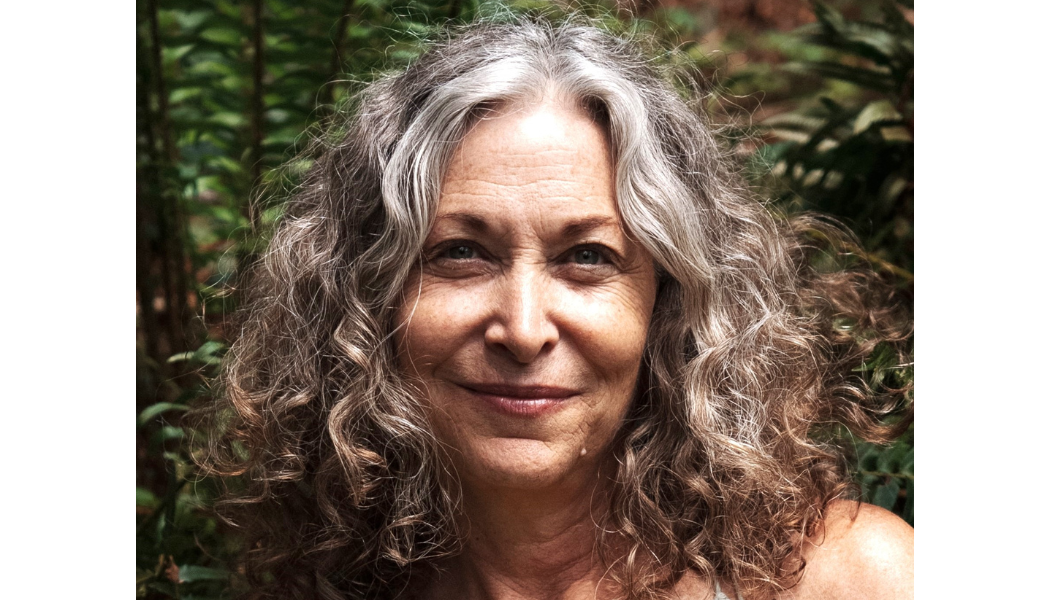
Joanne Cooper brings a rare blend of analytical thinking, community care, and human connection to her role as Regional Mentor.
Covering the North Shore, Bowen Island, Squamish, Whistler, and Bella Coola, Joanne works closely with local coordinators and partners to strengthen community responses to adult abuse, neglect, and self-neglect — with a focus on prevention, dignity, and collaboration.
Her unique path to BC CRN is anything but linear, shaped by curiosity, leadership, and a deep belief in the power of community.
From Math and Software to People and Communities
Joanne grew up just outside Detroit, Michigan, in Oak Park, a place she remembers fondly for its diversity and strong sense of community.
“It was extremely diverse. They used to talk about Oak Park being called the melting pot,” she recalls. “It was small, close-knit, and everyone knew each other’s families. It was a wonderful place to grow up.”
She went on to study math at the University of Michigan, later earning a Master’s Degree in Industrial Engineering.
Her early career took her into software development and management roles in Chicago, including work with Honeywell and Northwestern University.
But it didn’t take long for Joanne to realize where her true passions lay.
“I quickly realized that I like solving human problems more than software problems,” she said.
A pivotal moment came when she experienced a management style rooted in support rather than hierarchy.
“They walked around and said, ‘How can I help? What do you need?’” Joanne remembers. “Instead of top-down management, it was bottom-up management — and I loved it.”
That philosophy continues to guide her work today.
Finding Home and Purpose on the North Shore
In 2005, Joanne and her family moved to Canada, settling in North Vancouver.
“It was a dream come true, living in North Vancouver in the mountains,” she said. “I love the West Coast, recycling, socialized medicine, and the overall way of life.”
After settling in, Joanne quickly became immersed in the non-profit and seniors’ services landscape on the North Shore.
She volunteered on the District of North Vancouver Community Services Advisory Committee, reviewed grant applications, worked with Lionsview Seniors Planning Society, and eventually became Executive Director of Capilano Community Services Society.
Through this work, she developed deep relationships across the sector — often crossing paths with BC CRN long before she officially joined the organization.
When the Regional Mentor role with BC CRN became available, everything seemed to align.
“It felt like everything came together,” Joanne said. “This job felt like a perfect fit. It brought together so many things I love to do.”
What a Regional Mentor Really Does
When asked how she’d explain her role to someone unfamiliar with Community Response Networks, Joanne kept it simple.
“My role is to help build community capacity to educate and raise awareness about abuse,” she said. “I create partnerships, work with different organizations, and help people understand what services are available — and how we all work together.”
Her weeks are spent staying closely connected with coordinators, tracking what’s happening across regions, building partnerships, identifying gaps, and finding ways to respond.
Community Looks Different Everywhere
Joanne supports regions that range from urban and suburban to remote and predominantly Indigenous communities.
What stands out most to her is the level of isolation many people experience — often in ways that aren’t immediately visible.
“There are a lot of people who are isolated,” she said. “In some communities, you have people with significant financial resources who are still living alone… and many are trying hard to hold on to their homes.”
She’s especially moved by the way smaller communities rally around one another.
“In Bowen Island, in particular, it’s beautiful,” Joanne shared. “It’s a small community. You have the manager of the general store, the person at the bar, the pastor, the librarian, and the police all working together. They come together and say, ‘Peter needs some help. How do we help Peter?’”
“These communities truly come together to support each other,” she added. “It’s friendly, kind, and compassionate.”
Why Prevention and Connection Matter
For Joanne, prevention-focused work is essential because many people don’t recognize abuse or feel safe speaking up.
“A lot of people don’t know what abuse looks like and are in abusive situations without realizing it or knowing what to do about it,” she said. “Education and awareness are incredibly important.”
She vividly recalls her first week on the job, when people approached her at a conference to share deeply personal stories.
“People just started telling me about their experiences of abuse,” Joanne said. “It felt meaningful and important. I listened and said, ‘We care. We’re here. We can help.’”
Those moments reaffirm why community connection matters so deeply.
“They say abuse happens in isolation and in the darkness,” she explained. “The first step is helping people out of that darkness — helping them feel safe, connected, and part of a community instead of alone.”
Life Beyond Work
Outside of work, Joanne is anything but ordinary. She’s an avid tennis player, a passionate hiker, a film-festival fan, and a devoted music lover.
“I love punk and alternative music,” she said. “I saw Black Flag a few months ago.”
She’s also a proud mom to two daughters and shares her home with two beloved cats — Moti, a Norwegian forest cat, and Shoshana, a silver tabby.
Looking Ahead
Joanne is especially energized by the work ahead on hoarding, ageism, and community development.
“My love is problem-solving and being able to make a difference in people’s lives and in the community,” she said.
She’s also motivated by partnership-building, grant writing, and finding ways for organizations to work together more effectively.
“I feel inspired, working with such committed colleagues and local partnerships” she said. “I feel like we can make a difference by working together towards a common goal.”
“I like being of service,” Joanne reflected. “It gives me a strong sense of purpose.”
That sense of purpose is evident in everything she brings to her role at BC CRN.
